For two decades, the relationship between Indian investors and Dubai real estate was transactional: buy, rent, repatriate. However, a landmark report released on December 18, 2025, by Savills India confirms a structural break in this pattern.
The era of pure speculation is ending. We are now witnessing the “residency era,” where Indian High-Net-Worth Individuals (HNWIs) are effectively treating Dubai not just as a portfolio diversifier, but as their primary global base for lifestyle, legacy, and succession planning.
The Headline Shift: From Parking Capital to Planting Roots
According to the Savills findings, the motivation for Indian capital entering Dubai has fundamentally evolved. While “tax efficiency” remains a pillar, it is no longer the sole driver. The new buzzwords are “Lifestyle” and “Legacy.”
In late 2025, wealthy Indian families are no longer looking for a standard 6% rental yield on a small apartment in Business Bay. They are looking for:
-
Generational Stability: A hedge against currency fluctuations and volatility back home.
-
Global Mobility: Leveraging the UAE’s 10-Year Golden Visa as a de facto “Plan B” citizenship.
-
Institutional-Grade Wealth Management: Utilizing the Dubai International Financial Centre (DIFC) to structure family offices and foundations.
“The driver is shifting from just ‘tax efficiency’ to ‘lifestyle and legacy planning,’ with families prioritizing long-term residency.” — Savills India Report (Dec 2025)
The “Dubai Lifestyle” Infrastructure: Why Now?
Why is this shift solidifying in December 2025? It is the culmination of Dubai’s maturation from a transit hub to a permanent destination:
-
The Power of Self-Sponsorship: The Golden Visa has decoupled residency from employment. This fundamental shift allows Indian investors to hold a self-sponsored, renewable 10-year residency, completely eliminating the risk of losing their home base due to job changes or economic shifts.
-
The Education Magnet: Dubai now boasts a critical mass of “Outstanding” rated international schools. For Indian families, this eliminates the need to send children to boarding schools in London or the US; they can access Ivy League pathways right from Dubai.
-
Proximity & Connectivity: With multiple daily flights to Mumbai, Delhi, and Bangalore, Dubai is practically a suburb of India—but with first-world infrastructure and safety.
Market Impact: What Are They Buying in Dubai?
The “Investment vs. Residency” shift is visibly altering transaction data across the city. We are seeing a decline in the volume of small investor units, replaced by a surge in “Trophy Assets”:
-
Super-Prime Villas: Demand is concentrated in Emirates Hills, Palm Jumeirah, and Jumeirah Bay Island. These areas offer the privacy, security, and community status essential for ultra-high-net-worth families.
-
The Rise of Palm Jebel Ali: As Palm Jumeirah inventory tightens, forward-thinking Indian families are securing large plots and villas on Palm Jebel Ali, viewing it as the next frontier for legacy homes.
-
Branded Residences: Projects like the newly launched Mercedes-Benz Places or The Chedi are highly coveted. They offer “turnkey luxury” with hotel-grade service, perfect for families who split their time between India and Dubai and require a “lock-and-leave” solution.
-
Off-Plan Consolidation: Wealthy buyers are increasingly purchasing entire floors in luxury towers (in Downtown or Dubai Canal) to create massive, custom penthouses for multi-generational living.
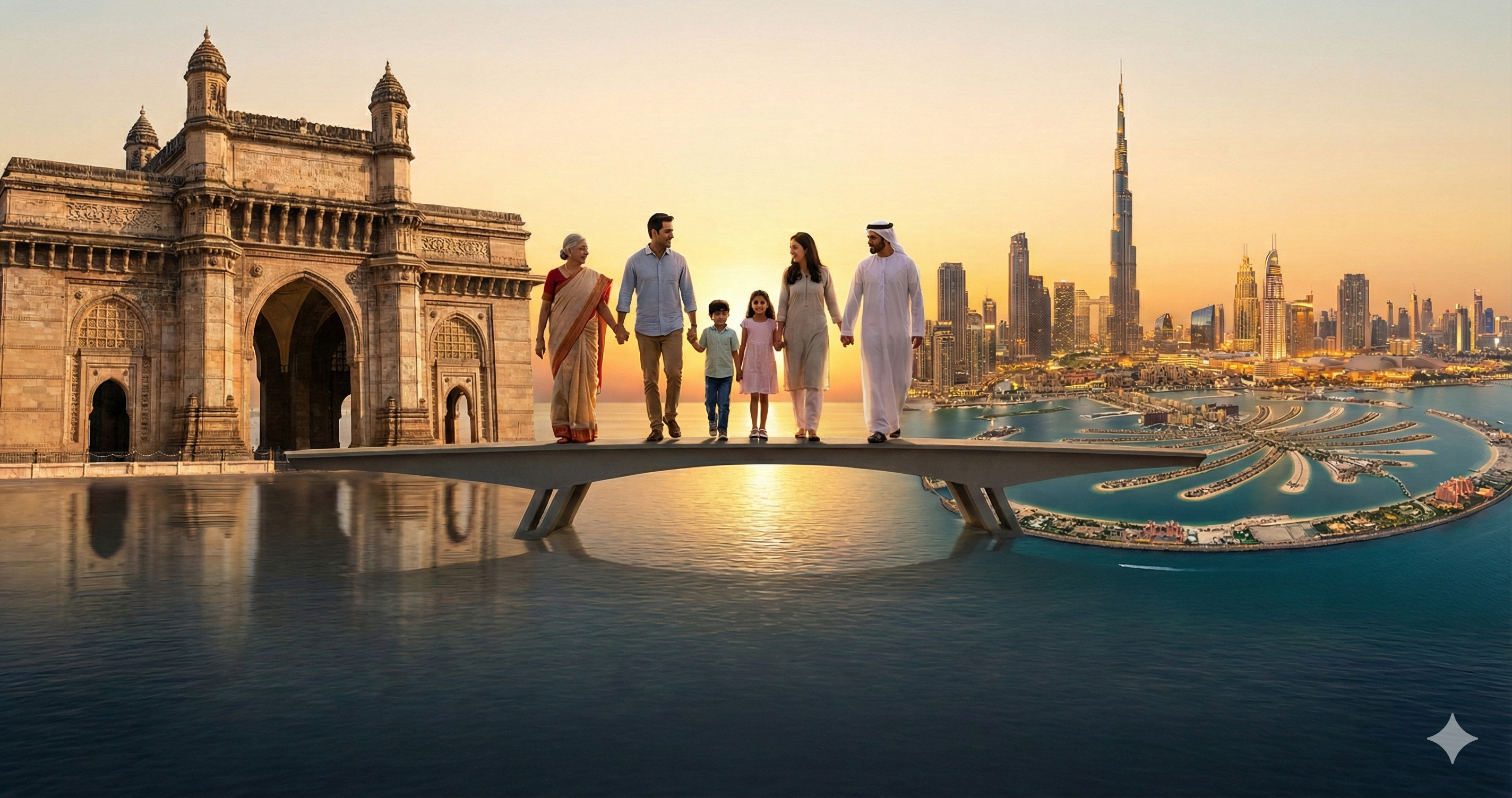
For the Indian elite, Dubai is no longer just a place to do business, it is the place they now call home.
Are you looking to structure your family’s legacy in Dubai? Contact our Protfolio Manager for a consultation on Golden Visas, DIFC Foundations, and exclusive off-market estates.