
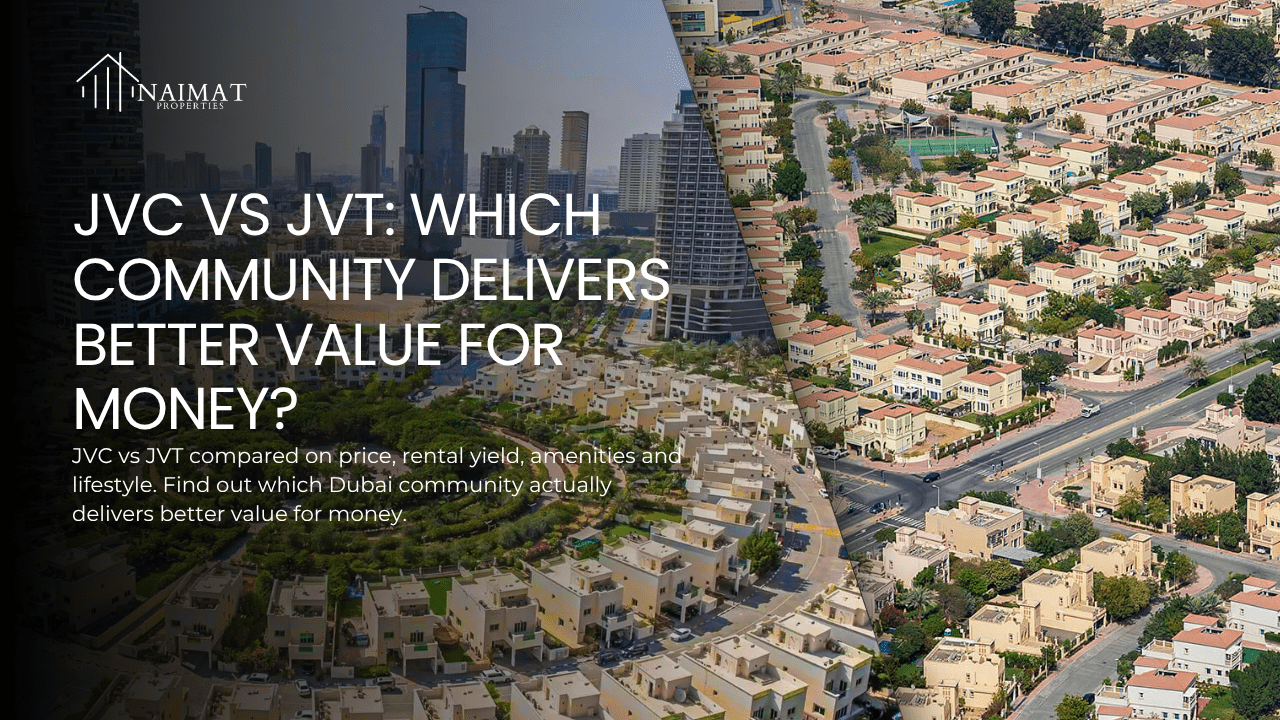
JVC vs JVT: Which Community Delivers Better Value for Money?
Estimated reading time: 7 minutes
If you’ve spent any time browsing Dubai property listings, you’ve probably run into the same debate over and over: JVC vs JVT. Jumeirah Village Circle and Jumeirah Village Triangle sit right next to each other, share a developer pedigree, and get pitched to the same buyers. But they are not interchangeable. One tends to win on price and rental yield, the other on space and quiet. So, which one actually delivers better value for money? Let’s break it down.
JVC vs JVT: A Quick Overview
Before comparing numbers, it helps to understand what each community actually is. Jumeirah Village Circle (JVC) is a large, circular masterplan packed with mid-rise apartment buildings, retail strips, and pocket parks. Jumeirah Village Triangle (JVT) is its quieter neighbour: a grid of villa clusters and low-rise buildings built around wide, tree-lined streets. Both fall under the same Nakheel-developed “Jumeirah Village” concept, which is exactly why they’re compared so often.
Location and Connectivity
JVC sits closer to Sheikh Mohammed Bin Zayed Road and Al Khail Road, giving it faster access to Dubai Marina, Downtown, and Business Bay. JVT is set slightly further west, bordered by Sheikh Zayed Road on one side, but its internal layout means longer drive times to reach the community’s edge. For daily commuters, JVC generally has the edge on connectivity, while JVT rewards residents who mostly stay within the neighbourhood.
Price Comparison: JVC vs JVT
This is usually where the real decision gets made. On a price-per-square-foot basis, JVC apartments are typically more affordable than comparable units in JVT, largely because JVC has a much higher supply of studio and one-bedroom apartments. JVT, with its villa-heavy, lower-density mix, commands a premium for larger layouts and more green space.
- Studios and 1-beds: JVC offers more inventory and lower entry prices.
- Villas and townhouses: JVT has a stronger, more established villa market.
- Price growth: Both communities have shown steady appreciation, though JVC’s volume of transactions makes its pricing trends easier to track.
In short, if your budget is entry-level, JVC usually wins on affordability. If you’re comparing villas specifically, JVT’s pricing reflects the extra land and privacy you’re paying for.
Rental Yield: Which Community Performs Better?
For investors, rental yield is often the deciding factor in the JVC vs JVT comparison. JVC has consistently posted some of the higher gross rental yields in Dubai’s mid-market segment, driven by strong tenant demand for affordable apartments near major road networks. JVT’s yields tend to be steady but slightly lower, since villa rentals attract a smaller, more specific tenant pool.
If your goal is maximum rental return on a modest budget, JVC is typically the stronger performer. If you’re after long-term tenants who value space and stability, JVT can still deliver solid, if less headline-grabbing, returns.
Amenities and Lifestyle
JVC leans into convenience. It’s dense with cafes, gyms, nurseries, supermarkets, and community parks, most of them walkable from any given building. That density is a double-edged sword, though — it also means more traffic and construction activity, since parts of JVC are still being built out.
JVT, by contrast, feels more residential and settled. Wide streets, mature landscaping, and villa clusters give it a suburban feel that’s harder to find elsewhere in new Dubai. Amenities exist, but they’re more spread out, so residents often rely on a car for daily errands.
Family Suitability
Families weighing JVC vs JVT often lean toward JVT for its villa options, private gardens, and quieter streets. JVC works well for smaller families or young professionals who prioritise convenience and lower costs over extra square footage.
Community Vibe and Resale Potential
JVC’s fast-paced development and constant new supply keep it feeling dynamic, but that same pace can affect resale timing — buyers sometimes prefer newer stock over older buildings. JVT’s more finished, low-density character tends to hold its identity better over time, which can support steadier long-term resale value for villa owners specifically.
JVC vs JVT: Which One Should You Choose?
There’s no single winner in the JVC vs JVT debate — the better choice depends on what “value” means to you.
- Choose JVC if: you want lower entry prices, higher rental yield potential, and easy access to major roads.
- Choose JVT if: you want more space, a quieter setting, and you’re focused on villa living rather than apartments.
Both communities deliver genuine value for money in Dubai’s mid-market segment — they simply deliver it in different ways.
Frequently Asked Questions
Is JVC cheaper than JVT?
Generally, yes. JVC’s apartment-heavy supply keeps average prices per square foot lower than JVT, where villas and townhouses dominate the market.
Which has better rental yield, JVC or JVT?
JVC typically posts higher gross rental yields, largely due to strong demand for affordable apartments and its proximity to major roads.
Is JVT a good place for families?
Yes. JVT’s villa clusters, private gardens, and quieter streets make it a popular choice for families who prioritise space over convenience.
Which community has better connectivity?
JVC generally offers faster access to Sheikh Mohammed Bin Zayed Road and Al Khail Road, making commutes to Marina, Downtown, and Business Bay quicker.