Dubai Real Estate Summer: Hottest Market
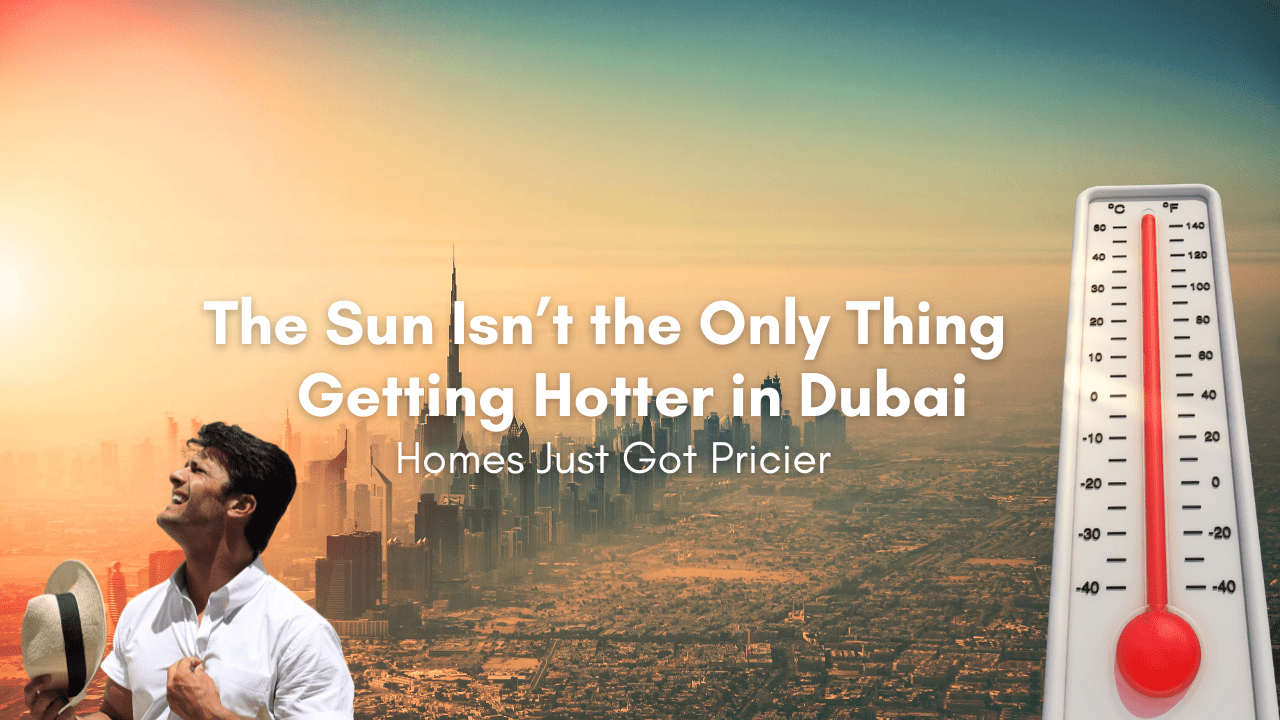
The Dubai real estate summer market is rewriting the rulebook. Forget the traditional summer slowdown. Indeed, the emirate’s property sector is now experiencing a vibrant, year-round surge. The warmer months, consequently, emerge as a period of heightened activity and strategic opportunities. This remarkable shift is driven by robust demand, a maturing development landscape, and forward-thinking government initiatives. All these factors contribute to record-breaking growth, projected to continue well into 2025.
While a significant increase in new property supply is on the horizon from 2025 to 2027, Dubai’s inherent market resilience, coupled with evolving buyer behavior and adaptive developer strategies, points towards a more balanced yet undeniably dynamic future. The city continues to cement its status as a premier global investment hub, attracting a diverse influx of international capital and talent. This article explores the fascinating interplay between Dubai’s unique summer characteristics and its thriving real estate market, offering insights into current trends and future prospects.
Defying the Heat: Dubai’s Year-Round Real Estate Momentum
From Seasonal Slowdown to Summer Surge in Dubai Real Estate
Historically, Dubai’s scorching summer months, typically from June to September, were considered a quieter period for real estate. This perception arose largely due to the extreme heat, which made in-person property viewings less appealing. Furthermore, many expatriates tended to travel abroad for extended vacations during this time.
However, recent market data tells a different story. Summer has unequivocally emerged as a peak season for property transactions in Dubai. For example, Summer 2024 recorded the highest volume of property sales and rental transactions for the year. It saw 64,596 sales and 372,337 rental transactions between June and September. This represents an 18.1% increase over spring and a 38.1% jump compared to the traditionally cooler winter months for sales.5 Importantly, this isn’t a one-off anomaly; this pattern has held strong for three consecutive years. This signals a fundamental and sustained shift in market behavior.
The Engines of Growth
Several interconnected factors are fueling Dubai’s sustained real estate growth:
- Soaring Demand and Limited Supply: A key characteristic of the market in 2024 was a significant demand-supply gap. New supply, consequently, struggled to keep pace with soaring demand. This imbalance directly led to record increases in rents, property prices, and transaction volumes.
- Population Growth and Expat Influx: Dubai’s population reached approximately 3.93 million as of May 2025. Expatriates, moreover, make up a dominant 92% of this demographic. This substantial and growing expatriate community is a primary catalyst for sustained housing demand. Over 100,000 new expatriates entered Dubai in Q1 2025 alone. This influx creates immediate and continuous housing needs, regardless of the season.
- Investor Confidence and Diversified Base: The market’s growth is increasingly driven by genuine end-user demand and yield-seeking investors. This marks a shift from previous cycles, which were more reliant on short-term speculative activity. Foreign investors, furthermore, account for nearly 58% of all residential transactions. Significant interest comes from diverse global markets, including India, Russia, the UK, China, and Germany. Dubai has also seen the largest influx of millionaires globally, thereby boosting demand for prime properties.
- Regulatory Support and Incentives: Proactive government initiatives, such as the Golden Visa, offer long-term residency. These measures make Dubai a more attractive and stable destination. Additionally, regulatory updates like the revised RERA index enhance market clarity. They also help stabilize rental increases. Meanwhile, the broader Dubai Economic Agenda D33 reinforces the emirate’s vision as a global hub.
A Market on Fire: Performance Highlights (2024-2025)
Record-Breaking Numbers
Dubai’s real estate sector experienced a landmark year in 2024. The total value of transactions reached AED 761 billion, a remarkable 20% year-on-year growth, encompassing 226,000 transactions.13 This strong momentum continued into Q1 2025. Transactions, furthermore, reached AED 142.7 billion (approximately $38.9 billion), marking a significant 22% year-on-year increase.
Property Types in Focus
The robust market performance is evident across various property segments:
- Residential Sales & Prices: Citywide residential rents and sales prices saw substantial increases of 16% and 18% year-on-year, respectively, in 2024. In Q2 2024, home prices surged by 20.5% year-on-year. Looking ahead, luxury villas, beachfront homes, and penthouses are expected to see further price increases of 8-10% in 2025. Apartment sales, for instance, increased by 42% year-on-year in 2024, with prices rising by 20% in Q1 2025. Villa sales also grew by 21.1% in 2024, and recorded an impressive 29.3% annual price increase in Q1 2025. Notably, villas consistently outperform apartments in terms of price growth.
- Off-Plan vs. Ready Properties: Off-plan property deals were a significant driver. They increased by 23.9% in Q2 2024 and surged by 51% to 119,800 units in 2024. In Q1 2025, off-plan sales accounted for 56% of all transactions. This reflects strong investor confidence in Dubai’s future development.
- Rental Market: The rental market is highly dynamic. Average annual apartment rents reached AED 86,000, and villas AED 190,000, as of December 2024. More recent data, furthermore, shows apartment rents rose by 21.7% and villa rents by 23.4% in the year leading up to April 2025. Forecasts suggest short-term rental yields could grow by 18% by end-2025. Meanwhile, long-term rental income is expected to increase by 13%.
- Commercial Real Estate: Dubai’s office sector performed robustly. Rents surged by 22% year-on-year in 2024, with a further 10-12% increase forecast for 2025. Commercial sales, moreover, saw a 5.7% increase in transaction value in 2024. This indicates significant appreciation due to supply shortages. The market is projected to remain undersupplied until 2027/2028, especially for large office spaces.
It’s worth noting a discrepancy in commercial rental data. While most sources report significant annual increases, one report indicates a nearly 40% drop in commercial rental prices in June 2024 compared to June 2023. This appears to be an outlier against the broader market consensus of robust growth. Nevertheless, the sustained high demand and limited supply across both residential and commercial sectors, despite price increases, highlight Dubai’s strong economic fundamentals. This also underscores its success in attracting long-term residents and businesses. This market behavior suggests a move beyond speculative cycles towards a more mature investment environment.
Table 1: Dubai Real Estate Market Performance Snapshot (2024-2025)
| Metric | 2024 Performance (Annual) | Q1 2025 Performance | 2025 Forecasts (Annual) | |
| Total Transaction Value | AED 761 Billion (20% YoY Growth) | AED 142.7 Billion (22% YoY Growth) | AED 150-160 Billion (Summer forecast) | |
| Total Transaction Volume | 226,000 (36% YoY Growth) | 45,474 (22% YoY Increase) | Record-breaking summer expected | |
| Residential Sales Prices | +18% YoY | +20% YoY (Apartments), +29.3% YoY (Villas) | <10% increase (overall) 7; 8-10% (Luxury) | |
| Residential Rental Prices | +16% YoY | +21.7% YoY (Apartments), +23.4% YoY (Villas) to Apr 2025 | Moderation expected | |
| Office Rents | +22% YoY | Rising (Q1 2025) | +10-12% forecast | |
| Off-Plan Transactions | 119,800 (51% YoY Growth) | 56% of total transactions | >63% of all transactions (Summer forecast) | |
| Residential Unit Handover | 30,200 | 9,000+ (Q1 2025) | 42,000+ (41% surge YoY) |
Summer’s Strategic Advantage: Opportunities Unveiled for Dubai Real Estate
Beyond the Thermometer: Why Summer is Prime Time
The transformation of Dubai real estate summer into a peak season is driven by several interconnected factors:
- Expat Relocation Patterns: The continuous influx of new expatriates, with over 100,000 new arrivals in Q1 2025 alone, creates constant, year-round housing demand.4 Furthermore, many families time their relocations to coincide with school breaks. These breaks often fall during the summer, leading to a surge in rental and sales activity.
Adaptive Market Strategies
- Developer Strategies and Incentives: Developers have adapted by strategically launching new off-plan projects. They also offer attractive incentives during the summer. These include appealing post-handover payment plans and limited-time promotions, particularly in the mid-luxury segment. Consequently, this approach transforms summer into a “value window” for buyers.
- Technological Facilitation: Advancements in real estate technology, including virtual tours, online platforms, and data-driven valuation tools, have decoupled market activity from seasonal weather. This, therefore, enables remote exploration and transactions. Ultimately, it ensures a rapid, year-round market pace.
- Government Initiatives and Economic Momentum: Broader government initiatives, such as the Dubai Economic Agenda D33, play a crucial role. Events like Dubai Summer Surprises (DSS) also attract residents and visitors. These initiatives indirectly stimulate economic activity, which benefits the real estate sector, especially short-term rentals and retail spaces.
Who’s Buying and Renting in Summer?
The Dubai real estate summer months present distinct behavioral patterns for both buyers and renters:
- Buyer Behavior: While the heat can deter casual in-person viewings, summer can be a strategic period for serious buyers. Developer incentives, coupled with potentially less competition compared to peak winter months, can lead to more favorable negotiations.
- Renter Behavior: Summer is a highly active period for rental transactions, as evidenced by the record 372,337 rental contracts signed in Summer 2024. The short-term rental market, in particular, sees significant demand from families visiting during school breaks and professionals relocating to Dubai. These individuals often seek temporary accommodation while securing permanent housing. Property owners, therefore, can maximize revenue by using dynamic pricing, highlighting cooling amenities (e.g., powerful AC, pool access), and offering flexible booking options.
The Broader Picture: Economic & Lifestyle Influences
Beyond direct real estate factors, broader economic and social initiatives also influence market dynamics:
- Flexible Work Policies: The ‘Our Flexible Summer’ initiative for Dubai government employees (July 1 to September 12, 2025) introduces a four-day work week or reduced summer hours. While direct real estate impact data isn’t explicitly detailed, this flexibility could indirectly influence residential preferences. It might, for example, potentially increase demand for short-term stays or staycations within Dubai during extended weekends.
- Cost of Living (Electricity Bills): The intense summer heat, with temperatures consistently between 40°C and 50°C, leads to a significant increase in electricity consumption. This is primarily due to prolonged air conditioning use.41 Residents, consequently, report their DEWA bills sometimes doubling or tripling. This factor influences the overall cost of living. It could also subtly affect decisions between renting and owning, or drive demand for more energy-efficient properties in the long term.
The Road Ahead: Supply, Stability, and Sustainable Growth (2025-2027)
The Incoming Wave: New Supply
Dubai’s real estate market is on the cusp of a significant increase in residential property supply. Over 42,000 units are expected in 2025, marking a 41% year-on-year increase from 2024. This trend continues, with approximately 42,000 units projected for 2026. A remarkable 120,000 units are also planned for handover in 2026, dwarfing the 30,000 units delivered in 2024. This projected increase signifies an 80% rise from 2024 deliveries. It is, moreover, a direct result of the high volume of new projects launched in 2024, averaging nearly one new development every 15 hours.
Price & Rent Outlook: Moderation, Not Decline?
The impending supply surge is expected to moderate the rapid price and rental increases seen recently. A moderate increase in rent and sales prices, less than 10%, is anticipated in 2025 as the supply pipeline builds. However, expert opinions diverge on the extent of this impact:
- Fitch Ratings’ Outlook: forecasts a “moderate correction” in Dubai’s residential property prices. They anticipate a decline of up to 15% starting in H2 2025 and continuing into 2026. This outlook is based on the projected supply glut outpacing Dubai’s annual population growth. Population growth is estimated at around 5%, compared to an average 16% annual increase in housing supply between 2025 and 2027.
- Other Analysts’ Consensus: In contrast, a broad consensus among other leading real estate consultancies, including Cushman & Wakefield, The Luxury Playbook, Betterhomes, Bayut, ValuStrat, Deloitte, and JLL, projects continued growth or stabilization. They do not foresee a significant price decline. These firms, therefore, anticipate a moderation in the rate of price growth. This signals a move towards a more sustainable growth pattern.
This divergence highlights the complexity of forecasting. While some models emphasize supply-side pressures, others focus on enduring demand drivers. However, given the strong foundational demand from genuine end-users and long-term investors, any “correction” is more likely to be a stabilization of rapid growth rates, rather than a sharp or prolonged downturn.

Building for the Future
Despite the anticipated supply increase, Dubai’s real estate market is positioned for long-term stability and sustainability. Regulatory adjustments, such as the updated RERA index, enhance market transparency and confidence. The market’s structural strength is further reinforced by consistent foreign investor interest, economic resilience, and an attractive tax-free property environment. Moreover, Dubai’s strategic vision, exemplified by initiatives like the Dubai 2040 Urban Master Plan, focuses on sustainable urban development and infrastructure projects. These are expected to further enhance its attractiveness.
Navigating the Market: Tips for Every Stakeholder in Dubai Real Estate Summer
For Investors: Seizing the Moment
The evolving dynamics of Dubai’s real estate market, particularly during the Dubai real estate summer season, present nuanced opportunities for investors. Strategic submarket selection and asset strategy are paramount. Significant capital gains, ranging from 15% to 25% by handover, are particularly evident in off-plan units. These are found in emerging areas like Arjan and Jumeirah Village Circle (JVC).14 The luxury segment, including villas, beachfront homes, and penthouses in prime locations like Palm Jumeirah and Dubai Hills Estate, is projected to see continued price increases of 8-10% in 2025. Summer, once quieter, is now a “compelling value window.” This is due to attractive post-handover payment plans and limited-time incentives, especially in the mid-luxury segment. Investors should also consider yield expectations when choosing between long-term and short-term rentals, as both show strong performance.
For Buyers: Smart Moves in the Heat
For prospective buyers, the current market environment, particularly during the Dubai real estate summer, offers distinct advantages. Leveraging developer incentives, such as attractive post-handover payment plans and summer promotions, can provide enhanced negotiation leverage. Exploring emerging locations, including Dubai CommerCity and Expo City Dubai, may offer more affordable options. To mitigate summer heat challenges, utilizing virtual reality home tours and digital platforms is highly recommended. This allows for thorough remote viewings.
For Sellers & Developers: Adapting to the New Normal
Sellers and developers must adapt to capitalize on year-round activity. For sellers, maintaining strong visibility during summer is crucial. This can be achieved through robust digital marketing campaigns, including social media ads and SEO optimization. Highlighting indoor amenities, such as powerful air conditioning and pool access, is essential in property listings and virtual tours. For developers, strategically launching new projects with appealing payment plans and summer-specific incentives has proven effective in driving off-plan sales.
Conclusion
The Dubai real estate summer market has definitively moved beyond its traditional seasonal cycles. Indeed, summer is now firmly established as a period of significant activity, rather than a slowdown. This transformation is a testament to the emirate’s dynamic economy, its success in attracting a diverse global population, and its proactive governance. The market’s sustained growth is underpinned by strong underlying demand from a rapidly increasing population and continuous expatriate influx. Moreover, robust investor confidence, strategic government policies, and the widespread adoption of technological advancements all facilitate year-round transactions.
While a substantial increase in new supply is anticipated in the coming years, potentially leading to a moderation in the pace of price appreciation, the overall outlook for Dubai’s real estate remains one of stability and resilience. The market’s fundamental strengths, including its tax advantages, high rental yields, and investor-friendly reforms, are expected to absorb the new inventory effectively. Dubai continues to solidify its position as a leading global real estate investment destination, offering unique and compelling opportunities for informed stakeholders across all segments, year-round.
Get in touch today to view curated properties with strong rental potential and long-term value.